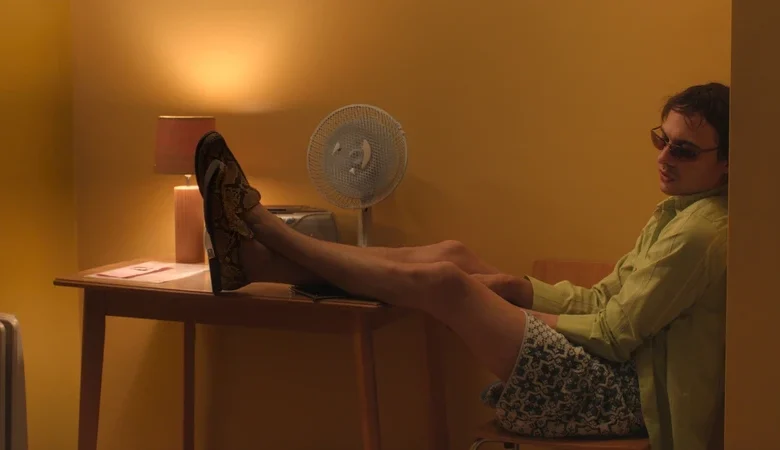
Urchin: A Heartbreaking Portrait of London’s Invisible Souls
- Category: Drama, Social Realism
- Release Date: June 26, 2026
- Cast: Frank Dillane, Megan Northam, Amr Waked, Karyna Khymchuk
- Language: English (Turkish Subtitles Available)
- Duration: 1h 39m
- Director: Harris Dickinson
- Screenwriter: Harris Dickinson
- Distributor: Bir Film
There is a long, storied tradition in British cinema known as “kitchen sink realism”—films that look unflinchingly at the lives of the working class and the marginalized. From Ken Loach to Mike Leigh, these directors force audiences to confront uncomfortable truths. In 2026, a new voice enters this arena, and it comes from a surprising place. Harris Dickinson, best known as the chiseled star of Triangle of Sadness and The Iron Claw, steps behind the camera for his feature directorial debut, Urchin (released in Turkey as Serseri).
Premiering on June 26, 2026, Urchin is not an easy watch. It is a jagged, raw, and deeply empathetic character study of homelessness in modern London. Starring Frank Dillane in a transformative performance, the film eschews the romanticism of poverty often found in Hollywood for a gritty, sensory experience that sticks to the skin like London rain. For the audience on fmovies.tr who appreciate cinema that challenges the status quo and highlights stellar acting, this is the most important drama of the summer.
The Plot: The Cycle of Self-Destruction
The narrative centers on Mike (Frank Dillane), a young man existing on the fringes of society. He is not the stereotypical elderly vagrant; he is young, capable, and intelligent, which makes his situation all the more tragic. The film opens not with a backstory, but in media res, thrusting the viewer into Mike’s daily grind: securing a sleeping spot, finding food, and avoiding the violence that lurks in the city’s shadows.
However, Urchin is not just about survival; it is about the internal war. Mike is trapped in a “cycle of self-destruction.” Every time he gains a foothold—a temporary job, a warm bed, a connection with a social worker—his own trauma and addiction pull him back under. The film pulls no punches in depicting the systemic failures of the welfare state, but it focuses primarily on Mike’s psychology.
A Glimmer of Hope?
The monotony of his struggle is interrupted by two key relationships. He meets a woman (Megan Northam) who, unlike the passersby who ignore him, actually *sees* him. Her presence offers a potential lifeline, a reason to get clean and get off the streets. Simultaneously, he navigates a complex dynamic with an older immigrant figure played by Amr Waked, who acts as a cynical mentor of the streets.
The plot is not driven by explosions or plot twists, but by small victories and devastating setbacks. It is a story about the fragility of the human spirit and how easy it is to fall through the cracks of a bustling metropolis.
Director’s Vision: Harris Dickinson’s Directorial Eye
It is always fascinating when an actor transitions to directing. They often prioritize performance over spectacle, and Harris Dickinson is no exception. However, what is surprising is how assured his visual style is.
Visual Aesthetic: Dickinson chooses to shoot London not as a city of landmarks, but as a labyrinth of concrete and steel. The color palette is desaturated—greys, muted blues, and the sickly yellow of streetlights reflect Mike’s internal state. The camera work is handheld and intimate, often hovering close to Frank Dillane’s face, creating a sense of claustrophobia. We are not watching Mike from a distance; we are walking beside him.
The Writing: As the sole screenwriter, Dickinson demonstrates a keen ear for the rhythm of the streets. The dialogue is sparse. Much of the story is told through silence, body language, and the ambient noise of the city. He avoids the trap of making Mike a saint; Mike can be aggressive, ungrateful, and difficult, which makes him feel like a real human being rather than a movie character.
The Cast: Frank Dillane’s Tour de Force
A film like this lives or dies by its lead actor, and Frank Dillane delivers the performance of his career.
- Frank Dillane as Mike: Known for Fear the Walking Dead and Harry Potter, Dillane disappears completely into the role of Mike. He underwent a significant physical transformation, losing weight and adopting a hollowed-out, exhausted posture. But it is his eyes that haunt the viewer. He conveys a mix of defiance and shame that is heartbreaking. He captures the physical toll of sleeping on concrete and the mental toll of being invisible.
- Megan Northam: Northam provides the emotional anchor of the film. Her chemistry with Dillane is tentative and fragile. She avoids the “savior” trope, playing her character as someone who has her own struggles but chooses to extend kindness.
- Amr Waked: The Egyptian star (Lucy, Syriana) brings gravitas to the supporting cast. His character represents a different side of London’s underclass—the immigrant experience. His interactions with Mike highlight the hierarchy and tribalism that exist even among the homeless.
Critical Review: A Brutal but Necessary Watch
Urchin is receiving buzz as a contender for the festival circuit, and rightfully so. It is a film that demands attention, even if it hurts to watch.
The “Invisible” City
The film’s greatest strength is its ability to make the invisible visible. We all walk past homeless people every day, often averting our gaze. Dickinson’s camera forces us to look. He details the mundane horrors of homelessness: the lack of sanitation, the constant threat of theft, and the dehumanizing bureaucracy of seeking aid. It is social commentary at its finest—showing, not preaching.
Emotional Resonance
While the film is bleak, it is not without moments of grace. A shared cigarette, a joke between strangers, a moment of warmth in a shelter—these small moments shine brightly against the dark backdrop. The film argues that dignity is a basic human right, not a luxury. The ending is ambiguous, refusing to give the audience an easy resolution, which feels true to the subject matter.
Comparisons
Critics will inevitably compare Urchin to the Safdie Brothers’ Good Time for its frenetic energy and I, Daniel Blake for its social anger. However, Dickinson carves out his own space. His film is more internal, more focused on the psychology of isolation than the external politics.
Urchin (Serseri) is a powerful, uncompromising piece of cinema. It proves that Harris Dickinson is a double threat—a talented actor and a visionary director.
Frank Dillane’s performance is Oscar-worthy, a raw nerve exposed to the elements. This is not a “popcorn movie.” It is a film that will stay with you long after the credits roll, changing the way you look at the world and the people on the margins of it.