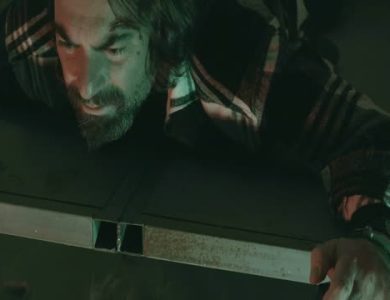
No Other Choice (Başka Yolu Yok): When the Job Market Becomes a Literal Battlefield
- Category: Drama, Thriller, Dark Comedy
- Release Date: January 9, 2026 (Turkey)
- Cast: Lee Byung-hun, Son Ye-jin, Cha Seung-won, Park Hee-soon
- Language: Korean (Turkish Subtitles Available)
- Duration: 2h 19m
- Director: Park Chan-wook
- Screenwriters: Park Chan-wook, Lee Kyoung-mi
There are filmmakers who make movies, and then there are masters who craft experiences. Park Chan-wook, the visionary mind behind Oldboy, The Handmaiden, and Decision to Leave, belongs firmly in the latter category. With his latest feature, No Other Choice (released in Turkey as Başka Yolu Yok; original title: Eojjeolsuga eobsda), he returns to the big screen with a razor-sharp scalpel, ready to dissect the anxieties of the modern middle class.
Releasing in Turkish cinemas on January 9, 2026, this film is arguably the most anticipated Korean export of the year. Bringing together two titans of the industry—Lee Byung-hun and Son Ye-jin—for the first time, the film is a pitch-black comedy disguised as a thriller. It asks a terrifyingly simple question: In a world where your job defines your worth, how far would you go to protect your status? For the audience on fmovies.tr, this is not just a suspense film; it is a masterclass in tension, style, and the absurdity of capitalism.
The Plot: Termination, Desperation, and Elimination
The screenplay, co-written by Park and Lee Kyoung-mi, adapts Donald Westlake’s novel The Axe (previously adapted by Costa-Gavras), but transplants the story to the hyper-competitive corporate landscape of contemporary South Korea. The protagonist is Man-soo (Lee Byung-hun), a man who has played by the rules his entire life. He was a dedicated employee at a paper company for years, defining his existence through his productivity and his ability to provide for his family.
Then, the unthinkable happens: Downsizing. Man-soo is abruptly fired. Cast out into the wilderness of unemployment in middle age, he finds that his experience is a burden, not an asset. The rejection letters pile up. His dignity erodes. His wife, Mi-ri (Son Ye-jin), tries to maintain a brave face, but the financial strain begins to crack the foundation of their domestic life.
A Radical Solution
As Man-soo grows increasingly desperate, something snaps—or perhaps, becomes chillingly clear. He realizes that there is a specific job opening that he is perfect for. The problem? There are other candidates. Younger, cheaper, or more connected candidates. Man-soo decides that the only way to guarantee his employment is to ensure he is the only applicant left.
Thus begins a dark odyssey. Man-soo transforms from a mild-mannered salaryman into a calculated predator. He tracks down his competitors—men who are just as desperate and qualified as he is—and begins to eliminate them. The film walks a tightrope between the horror of his actions and the pathetic relatability of his motivation. He isn’t killing for pleasure; he is killing for a paycheck.
Director’s Vision: The Elegance of Violence
Park Chan-wook is known for his “Cinema of Vengeance,” but No Other Choice shifts the focus to “Cinema of Survival.” The visual language here is exquisite. Park often finds beauty in the grotesque, and this film is no exception.
The cinematography contrasts the sterile, fluorescent-lit world of corporate offices with the messy, chaotic reality of Man-soo’s crimes. Park uses his signature precise framing—every shot looks like a painting—to highlight the absurdity of the situation. There is a specific focus on the mundane tools of the trade. Paper cutters, office supplies, and the titular “axe” (metaphorical or literal) become weapons of war.
Crucially, Park infuses the film with a wicked sense of humor. This is a dark comedy. We are invited to laugh at the sheer awkwardness of Man-soo’s attempts to be a killer. He is not a trained assassin like John Wick; he is a desperate accountant type who fumbles, hesitates, and panics. This awkwardness makes the violence feel more real and, paradoxically, more disturbing. Park forces the audience to be complicit: we start rooting for Man-soo to get away with it, simply because we understand his fear of poverty.
The Cast: A Clash of Titans
The casting of No Other Choice is a historic event for Korean cinema fans.
- Lee Byung-hun as Man-soo: Lee is one of the few actors who can seamlessly transition between Hollywood action blockbusters (G.I. Joe) and intense character studies (Mr. Sunshine, Concrete Utopia). Here, he gives a performance of twitchy, repressed energy. He conveys the humiliation of unemployment with just a shift in his posture. Watching his eyes go dead as he rationalizes murder is terrifying. He captures the “banality of evil”—he is a monster who just wants to pay his mortgage.
- Son Ye-jin as Mi-ri: Known as the “Queen of Melodrama” (Crash Landing on You, The Classic), Son Ye-jin steps into a darker role here. Mi-ri is not just the suffering wife. As the plot unfolds, we see layers of complexity. Is she aware of what her husband is doing? Is she pushing him? Son brings a steely resolve to the role, matching Lee’s intensity beat for beat. Her chemistry with Lee is electric, grounded in a weary, desperate love.
- Cha Seung-won and Park Hee-soon: The supporting cast adds texture to the world. Cha Seung-won plays a rival/antagonist with charisma, serving as a mirror to what Man-soo used to be (or wants to be).
Critical Review: A Satire for the End Stage of Capitalism
No Other Choice is not just a thriller; it is a scathing social commentary. It arrives at a time when economic anxiety is a global phenomenon, making it universally relatable.
The Horror of the Resume
The film argues that the modern job application process is dehumanizing. It reduces a human being to a piece of paper. Man-soo’s murderous spree is the ultimate rebellion against a system that treats him as disposable. Park Chan-wook suggests that in a hyper-capitalist society, we are all pitted against each other in a death match—Man-soo just takes the metaphor literally. The film forces us to ask: Is the killer the villain, or is the system that created him the true antagonist?
Pacing and Tone
At 2 hours and 19 minutes, the film demands patience, but it rewards it. The pacing is deliberate. The first act establishes the crushing weight of depression that comes with job loss. The second act accelerates into the thriller elements, while the third act descends into chaotic, operatic madness. The tone shifts from heartbreaking drama to slapstick violence and back again, a balancing act that only a director of Park’s caliber could pull off.
Visual Storytelling
Park creates a visual motif of “paper.” Paper is fragile, it can cut, and it can be burned. Man-soo worked for a paper company; his life is judged by resumes on paper. The fragility of his existence is visually represented throughout the film. The production design is meticulous, creating a world that feels slightly heightened yet grounded in the grimy reality of Seoul’s backstreets.
No Other Choice (Başka Yolu Yok) is a masterpiece. It is violent, funny, sad, and terrifying all at once. It confirms Lee Byung-hun’s status as one of the world’s greatest living actors and marks another triumph for Park Chan-wook.
For Turkish viewers, this film will resonate deeply. The themes of economic struggle and family duty cross cultural barriers. It is a film that will leave you looking at your co-workers—and your own ambition—with a newfound suspicion. It is the first must-see film of 2026.