Kokuho: A Monumental Masterpiece of Japanese Cinema
- Kategori: Drama, History, Performing Arts
- Yayın Tarihi: February 6, 2026 (Limited NYC/LA) / February 20, 2026 (Wide Theatrical)
- Oyuncular: Ryo Yoshizawa, Ryusei Yokohama, Ken Watanabe, Mitsuki Takahata, Soya Kurokawa, Keitatsu Koshiyama, Shinobu Terajima, Min Tanaka, Nana Mori
- Dil: Japanese (English Subtitled)
- Film Süresi: 2 hours, 55 minutes
- Yönetmen: Sang-il Lee
Every few years, a film arrives that completely redefines the landscape of its national cinema. It shatters box office records, captures the cultural zeitgeist, and demands the attention of the global stage. In 2026, that film is unequivocally Kokuho. Translating literally to “National Treasure,” the title is not merely a description of its subject matter, but a self-fulfilling prophecy. Following its domestic release in Japan, the film grossed a staggering $100 million, securing its place as the second-highest-grossing Japanese live-action film of all time.
Now, selected as Japan’s official submission for Best International Feature Film at the 98th Academy Awards, GKIDS brings this sweeping, three-hour epic to worldwide audiences. Directed by the masterful Sang-il Lee (known for his intense character studies in Villain and Rage), Kokuho is a generation-spanning saga that delves deep into the grueling, beautiful, and cutthroat world of traditional Kabuki theater. For our dedicated readers at fmovies.tr who appreciate cinema with profound emotional weight, flawless historical recreation, and powerhouse performances, this is the cinematic event of the season.
The Plot: From the Underworld to the Grand Stage
The narrative canvas of Kokuho is vast, opening in the evocative setting of Nagasaki in 1964. This was a year of profound transformation for Japan, marked by the Tokyo Olympics and the rapid modernization of a post-war nation. Yet, in the shadows, old traditions and dark syndicates still held immense power.
We are introduced to 14-year-old Kikuo (played in his youth by Soya Kurokawa), a boy whose life is upended by the sudden death of his father, a notorious yakuza gang leader. Destitute and carrying the heavy stigma of his criminal bloodline, Kikuo’s fate seems sealed in the gutter. However, an unexpected lifeline is thrown to him when he is taken under the wing of a highly venerated Kabuki actor (played with immense gravitas by Ken Watanabe).
A Rivalry Forged in Greasepaint and Blood
In his new, disciplined environment, Kikuo crosses paths with Shunsuke (Keitatsu Koshiyama in his youth), the biological and only son of his new mentor. The two boys could not be more different: Kikuo is the raw, unpolished outsider running from a legacy of violence, while Shunsuke is the privileged heir, burdened by the crushing expectations of his aristocratic theatrical bloodline.
Despite their contrasting origins, the boys form a complex bond that oscillates between fierce brotherhood and bitter rivalry. The film charts their parallel journeys over several decades. As they transition into adulthood—where the roles are taken over by the phenomenally talented Ryo Yoshizawa (Kikuo) and Ryusei Yokohama (Shunsuke)—their obsession with their art deepens. Kokuho chronicles their grueling ascent from the rigorous acting academies to the glittering, high-stakes stages of Tokyo. Along the way, their paths are littered with forbidden scandals, glorious triumphs, and devastating betrayals, all driven by a singular, consuming goal: to become the greatest living Kabuki master.
Director’s Vision: Sang-il Lee’s Masterful Direction
Directing a film that spans decades and clocks in at nearly three hours (2 hours and 55 minutes) is a Herculean task, but Sang-il Lee orchestrates it with the precision of a maestro.
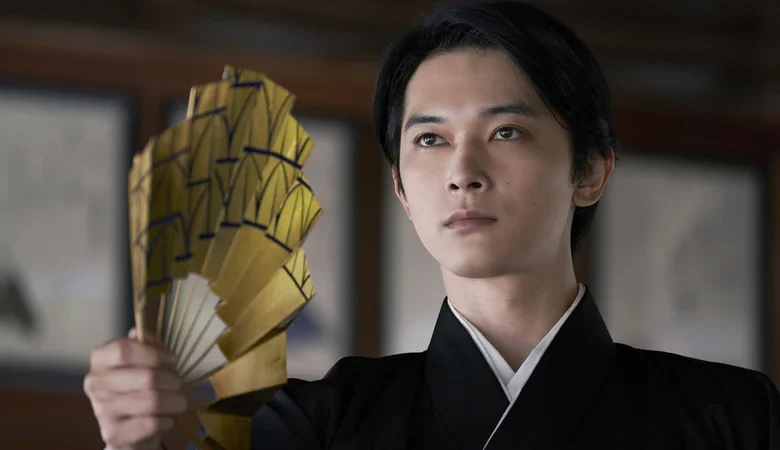
Lee does not merely use Kabuki as a colorful backdrop; he embeds the philosophy of the art form into the very DNA of the film. The cinematography is a study in contrasts. The early scenes in 1960s Nagasaki are filmed with a gritty, muted palette, reflecting Kikuo’s bleak origins. As the boys enter the theater world, the screen explodes with the vibrant reds, golds, and stark whites of Kabuki stage makeup and costumes.
Lee expertly utilizes long, unbroken takes during the theatrical performances, forcing the cinematic audience to appreciate the agonizing physical control and emotional exertion required by the actors. He bridges the gap between the stylized, exaggerated emotions of the Kabuki stage and the quiet, simmering personal tragedies occurring in the dressing rooms. The pacing is deliberate but never stagnant, allowing the audience to feel the weight of the passing years and the cumulative toll that artistic obsession takes on the human soul.
The Cast: A Theatrical Tour de Force
An epic of this magnitude relies entirely on its central performances, and the ensemble cast delivers what will surely be remembered as some of the finest acting of the decade.
The Dual Leads: Yoshizawa and Yokohama
Ryo Yoshizawa delivers a career-defining performance as Kikuo (stage name Toichiro Hanai). He brings a feral intensity to the role, channeling the character’s lingering yakuza edge into his explosive stage presence. Yoshizawa captures the tragedy of a man who uses art to run away from his own shadow, making Kikuo both terrifying and deeply sympathetic.
Opposite him, Ryusei Yokohama is equally spectacular as Shunsuke (Hanya Hanai). Yokohama has the more internalized role; he plays a man slowly suffocating under the weight of his father’s name. The physical transformation both actors underwent to master the intricate dances, vocal inflections, and stylized movements of Kabuki is astonishing. When they share the stage, the chemistry is electric—a dangerous mix of love, envy, and mutual respect.
A Legendary Supporting Ensemble
The veteran cast grounds the historical elements of the film. Ken Watanabe brings his trademark authority as the patriarch, Hanjiro Hanai. He is a looming figure, acting as both a savior and a tyrant to the young men. Mitsuki Takahata and Nana Mori provide exceptional depth as the women who navigate the periphery of this male-dominated world, offering emotional anchors amidst the swirling egos of the theater. Furthermore, the seamless transition between the child actors (Soya Kurokawa and Keitatsu Koshiyama) and their adult counterparts ensures the emotional continuity of the nearly three-hour saga.
Critical Review: Why Kokuho is Truly a “National Treasure”
It is easy to understand why Kokuho became a cultural phenomenon in Japan, drawing over 8.17 million admissions. It is a film that respects the intelligence and patience of its audience.
The True Cost of Genius
At its core, Kokuho is a meditation on the sacrifices required for greatness. The film poses a difficult question: Can true artistic purity only be achieved through personal suffering? Both Kikuo and Shunsuke bleed for their art. The film does not shy away from the darker aspects of traditional Japanese theater—the rigid hierarchies, the punishing physical demands, and the isolation required to inhabit a character entirely.
Earning Its Epic Runtime
A runtime of 175 minutes might seem daunting to modern audiences accustomed to fast-paced action, but Kokuho earns every single minute. The length allows the character arcs to breathe. When a betrayal occurs in the third act, it hurts profoundly because we have spent a lifetime with these characters. We have seen them as scared children and arrogant young men, making their eventual fates feel mythic and inevitable.
Oscar Potential
As Japan’s official submission for the 98th Academy Awards, the film has a incredibly strong chance, not just for Best International Feature, but potentially across production design, costume design, and cinematography categories. It carries the sweeping, classic prestige of films like Bernardo Bertolucci’s The Last Emperor or Chen Kaige’s Farewell My Concubine, merging historical scale with intimate human drama.
Kokuho is a cinematic triumph that demands to be seen on the largest screen possible. Sang-il Lee has crafted a visually intoxicating, emotionally devastating masterpiece that will linger in your thoughts long after the final curtain falls.
With phenomenal performances from Ryo Yoshizawa and Ryusei Yokohama, it is a brilliant exploration of brotherhood, rivalry, and the transcendent power of art. For the audience at fmovies.tr looking for a deeply enriching, world-class drama, Kokuho is not just highly recommended—it is absolutely essential viewing. Step into the theater, and witness the birth of a modern classic.