One Piece: An Odyssey of Freedom, Dreams, and the High Seas
- Category: Anime, Action, Adventure, Fantasy, Shonen
- Release Date: October 20, 1999 (Ongoing)
- Cast (Voice): Mayumi Tanaka (Luffy), Kazuya Nakai (Zoro), Akemi Okamura (Nami), Kappei Yamaguchi (Usopp), Hiroaki Hirata (Sanji)
- Language: Japanese (English Subtitles/Dubbing Available)
- Duration: 24 Minutes per episode (1100+ Episodes)
- Director/Studio: Toei Animation (Based on the manga by Eiichiro Oda)
In the vast ocean of anime history, few titles have managed to stay relevant for five years, let alone twenty-five. One Piece is not merely a television series; it is a cultural phenomenon, a rite of passage for anime fans, and arguably the most intricate fictional world ever constructed in the medium. Created by the legendary mangaka Eiichiro Oda and animated by Toei Animation, this saga of pirates, government conspiracies, and inherited will has captivated millions globally. With a rating of 4.8 on major platforms and a library exceeding 1100 episodes, One Piece stands as the undisputed king of the Shonen genre. But what makes this story about a rubber boy so compelling? Let’s set sail into the Grand Line to find out.
The Plot: The Great Pirate Era and the Quest for the One Piece
The story begins with a historical execution. Gol D. Roger, the King of the Pirates, reveals with his dying breath that his treasure, the “One Piece,” is real and located at the end of the Grand Line. His words ignite the “Great Pirate Era,” sending countless souls to sea in search of wealth, fame, and power.
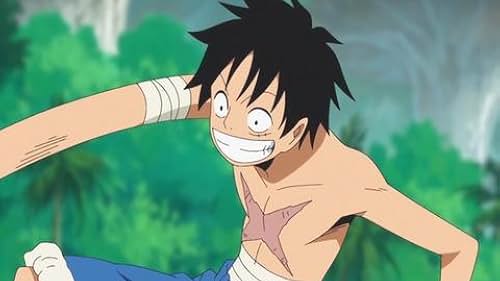
Enter Monkey D. Luffy, a young boy from East Blue who defies the stereotypical image of a pirate. He isn’t looking to pillage or plunder; he wants to be the freest man on the seas. Luffy possesses a unique ability granted by the Gomu Gomu no Mi (Gum-Gum Fruit), which turned his body into rubber. However, this power comes at a cost: he can never swim again—a fatal flaw for a pirate. Undeterred, Luffy sets out in a small barrel, aiming to assemble a crew and find the One Piece to become the new Pirate King.
The narrative structure of One Piece is a masterclass in long-term storytelling. It is divided into sagas (East Blue, Alabasta, Skypiea, Water 7, Marineford, Wano, and the current Egghead Arc). As Luffy travels from island to island, he doesn’t just fight villains; he liberates oppressed nations, uncovers the “Void Century” (a forbidden history erased by the World Government), and challenges the absolute justice of the Marines. The story evolves from a lighthearted adventure into a complex political drama involving slavery, racism, genocide, and the nature of freedom itself.
The Characters: The Straw Hat Pirates
The heart and soul of One Piece is its cast. The Straw Hat Pirates are not just a crew; they are a found family. Each member joins Luffy not out of obligation, but because he liberates them from their personal chains and supports their individual dreams.
Monkey D. Luffy (The Captain)
Luffy is simple-minded but emotionally genius. He doesn’t care about backstories or politics; if you feed him or are his friend, he will declare war on the entire world for you. His growth from a rookie to one of the Four Emperors (Yonko) is the spine of the series.
Roronoa Zoro (The Combatant)
The first to join, Zoro aims to be the World’s Greatest Swordsman. Stoic, directionally challenged, and fiercely loyal, he acts as the crew’s disciplinarian and vice-captain figure. His three-sword style is iconic in anime history.
Nami (The Navigator)
Initially a thief who hated pirates, Nami is the glue that holds the crew together. She aims to draw a map of the entire world. Without her navigational skills, the crew would have died within the first week in the Grand Line.
Usopp (The Sniper) and Sanji (The Cook)
Usopp represents the “human” element of the crew—fearful but brave when it counts. Sanji, the chain-smoking chef with a chivalrous code, fights only with his legs to protect his hands for cooking. Their dynamics add humor and depth to the ship.
The crew expands to include Chopper (a reindeer doctor), Nico Robin (an archaeologist seeking true history), Franky (a cyborg shipwright), Brook (a skeleton musician), and Jinbe (a fish-man helmsman). Every character has a tragic backstory that fleshes out the world’s lore.
Director and Production: Toei Animation’s Evolution
Analyzing the production of One Piece requires looking at its timeline. When the anime premiered in 1999, it utilized traditional cel animation, giving it a vintage, nostalgic charm. Over the decades, Toei Animation has transitioned to digital, and the quality has seen peaks and valleys.
However, the recent arcs, specifically Wano Kuni and Egghead, have featured a cinematic revolution. Directors like Megumi Ishitani have elevated the series to movie-quality animation, utilizing dynamic lighting, fluid combat choreography, and artistic direction that rivals the best seasonal anime. The sound design, featuring the legendary voice acting of Mayumi Tanaka (Luffy), has remained consistent and iconic. The soundtrack, filled with adventurous orchestras and emotional ballads (“Overtaken,” “The Very Very Strongest”), is instantly recognizable.
Category and Themes: More Than Just Battle Shonen
While categorized as “Action/Adventure,” One Piece transcends its genre. At its core, it is a story about Inherited Will and the Flow of Time. It tackles heavy themes that are surprisingly mature:
- Systemic Corruption: The World Government and the Celestial Dragons represent absolute power corrupted absolutely, touching on themes of eugenics and classism.
- Racism: The Fish-Man Island arc provides a nuanced allegory for real-world racial tensions and the cycle of hatred.
- Freedom vs. Control: Luffy represents chaotic freedom, while the antagonists (Marines/Government) represent authoritarian control.
Critical Review: Is It Worth the Commitment?
The most common criticism of One Piece is its length. “It gets good after episode 50” is a meme, but it’s also a barrier to entry. Watching 1100+ episodes is a daunting task. Furthermore, Toei Animation has been criticized for pacing issues—stretching one manga chapter into a full episode, resulting in slow scenes and excessive reaction shots. This pacing can sometimes dilute the tension of the original source material.
Why It Is a Masterpiece
Despite the pacing flaws, One Piece is unrivaled in World Building. Eiichiro Oda never forgets a detail. A character mentioned in episode 50 might return in episode 800 with crucial relevance. This creates a living, breathing world where events have consequences. The foreshadowing is unparalleled in fiction.
The emotional peaks of the series are devastatingly powerful. Moments like Nami asking for help, Robin declaring she wants to live, or the Going Merry’s funeral are etched into the memories of fans forever. The action, specifically the introduction of “Gears” (Luffy’s power-ups) culminating in the recent Gear 5, offers a spectacle that celebrates the absurdity and joy of animation.
One Piece is not just a show you watch; it is a journey you experience. It requires patience, but the payoff is the greatest adventure ever told in the medium of anime. If you value detailed storytelling, complex characters, and a world that feels infinite, this is the definitive anime experience.