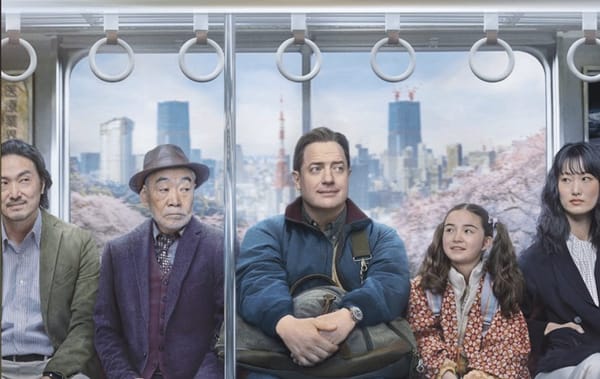
Rental Family: When Love is a Job, Can the Emotions Be Real?
- Category: Comedy, Drama
- Release Date: January 2, 2026 (Turkey)
- Cast: Brendan Fraser, Takehiro Hira, Mari Yamamoto, Akira Emoto, Shannon Mahina Gorman
- Language: English, Japanese (Turkish Subtitles Available)
- Duration: 1h 50m
- Director: Hikari
- Writers: Hikari, Stephen Blahut
The concept of “renting” a person to fill a void in one’s life—a fake father for a wedding, a fake boyfriend for a family dinner, or a fake friend for a lonely afternoon—is a uniquely Japanese phenomenon that has fascinated the West for years. Documentaries like Werner Herzog’s Family Romance, LLC have explored this, but rarely has it been given the Hollywood narrative treatment with genuine emotional weight.
Enter Rental Family (Kiralık Aile), the highly anticipated dramedy directed by the visionary filmmaker Hikari (known for 37 Seconds and Netflix’s Beef). Starring the resurgent Academy Award winner Brendan Fraser, the film is a melancholic yet strangely uplifting exploration of loneliness in the digital age. It asks a profound question: If a relationship is paid for, does that mean the feelings involved are fake? For the audience on fmovies.tr who appreciate cinema that bridges cultural gaps and tugs at the heartstrings without being overly sentimental, this is the first essential drama of 2026.
The Plot: An American Actor Lost in Translation
Phillip Vanderploeg (Brendan Fraser) is a man adrift. A middle-aged American actor living in Tokyo, his career has stalled, and his personal life is non-existent. He is a “gaijin” (outsider) in a city of millions, existing in the neon-lit margins, too old to be a cool expat and too foreign to truly integrate. He is a man who has spent his life pretending to be other people on stage, but now he has no one to be in real life.
Desperate for money and meaning, Phillip stumbles upon a job listing for a “Rental Family” agency. The premise is simple but surreal: he is hired to impersonate various figures in the lives of clients. One day he is a stern uncle scolding a nephew; the next, he is a sympathetic listener for a grieving widow. His acting skills, once useless, suddenly make him a star employee. He treats these roles with the gravity of Shakespeare, finding a strange comfort in the scripts provided by the agency.
The Line Between Role and Reality
The narrative conflict arises when Phillip is hired for a long-term assignment. He becomes the “father” figure for a troubled young girl, Mia (Shannon Mahina Gorman), and the “partner” to her struggling mother, Aiko (Mari Yamamoto). As Phillip integrates into their daily routine—eating dinner, helping with homework, arguing about chores—the boundaries begin to blur.
He starts to care. He starts to feel like he belongs. But the clock is always ticking; his time is billable by the hour. When the secrets of his employment threaten to come out, Phillip is forced to confront the lie he is living. Is he saving this family, or is he just using them to fix his own broken heart? The film navigates this moral grey area with immense sensitivity, avoiding easy answers.
Director’s Vision: Hikari’s Tokyo
Director Hikari is one of the most exciting voices working in international cinema today. With Rental Family, she avoids the “tourist gaze” often seen in Western movies set in Japan.
Visual Language: We don’t see the Shibuya Crossing or the robot restaurants. Instead, Hikari’s camera lingers on cramped apartments, quiet neighborhood parks, and the solitary spaces of Tokyo. The cinematography is intimate and handheld, creating a sense of voyeurism. We feel like we are peeking into private moments that we shouldn’t be seeing. This visual style mirrors the protagonist’s job—he is an intruder invited into intimacy.
Tone and Atmosphere: Hikari balances comedy and tragedy effortlessly. There are moments of laugh-out-loud absurdity as Phillip tries to navigate complex Japanese social etiquette while pretending to be someone he isn’t. But these laughs are quickly followed by scenes of crushing quietness. Hikari understands that the “Rental Family” industry exists because of a deep societal wound—isolation—and she treats the subject with respect, not mockery.
The Cast: Brendan Fraser’s Gentle Giant
While the supporting cast is stellar, the film rests entirely on the broad shoulders of Brendan Fraser.
- Brendan Fraser as Phillip: This role feels tailor-made for Fraser’s current career phase. He channels the same vulnerability that won him the Oscar for The Whale, but with a lighter, more charming touch. Phillip is a gentle giant, a man who wants to give love but doesn’t know how to receive it. Fraser’s expressive eyes convey the confusion and sorrow of a man who is paid to be loved. His physical comedy—navigating tiny Japanese spaces—is also a delight, reminding us of his roots in films like George of the Jungle, but matured.
- Mari Yamamoto as Aiko: Yamamoto (Pachinko) is fantastic as the client who becomes something more. She plays Aiko with a guarded exterior that slowly cracks. The chemistry between her and Fraser is unconventional; it’s not exactly romantic, but it is deeply intimate.
- Takehiro Hira as Shinji: Hira (Shogun) plays the agency boss or a rival figure (depending on the subplot interpretation), grounding the film in the business reality of the situation. He represents the cynical view that human connection is just a transaction.
- Akira Emoto: A veteran Japanese actor who adds gravitas to the ensemble, representing the older generation’s confusion with these modern solutions to loneliness.
Critical Review: A Modern Fable of Connection
Rental Family draws inevitable comparisons to Sofia Coppola’s Lost in Translation and Wim Wenders’ Perfect Days. Like those films, it is a story about a foreigner finding a piece of themselves in Tokyo. However, Rental Family is warmer and messier.
The Commodification of Intimacy
The film’s greatest strength is its exploration of the “Gig Economy of Emotion.” In a world where we order food, rides, and entertainment via apps, is ordering a dad really that different? The script by Hikari and Stephen Blahut challenges the audience’s judgment. Initially, we might find Phillip’s job pathetic or creepy. By the end, we see it as a necessary service in a fractured world. The film argues that sometimes, a “fake” kindness is better than “real” indifference.
Cultural Bridges
The film handles the culture clash element with nuance. Phillip isn’t the “White Savior” coming to fix the Japanese family. In fact, he is the one being saved. The Japanese characters are complex individuals, not exotic props. The dialogue switches between English and broken Japanese, reflecting the difficulty of communication—and how true understanding often happens in the silence between words.
Emotional Impact
Be prepared to cry. The third act delivers an emotional punch that feels earned. It doesn’t go for the Hollywood happy ending where everyone lives happily ever after. Instead, it offers a resolution that is bittersweet and realistic. It acknowledges that the rental contract must end, but the memories created during that time are real.
Rental Family (Kiralık Aile) is a beautiful, soulful film. It confirms Brendan Fraser’s status as one of our most empathetic actors and solidifies Hikari as a director to watch.
It is a quiet film, but its echoes last long after the credits roll. For anyone who has ever felt lonely in a crowd, or wished they could be someone else for just a day, this movie will resonate deeply. It is a tender reminder that family isn’t always blood; sometimes, it’s the people we choose—or the people we hire—who help us get through the night.