Revolver Lily: When Beauty Meets the Barrel of a Gun in 1924 Tokyo
- Category: Action, Adventure, Drama, Thriller, Mystery
- Release Date: January 27, 2026 (VOD / Digital Release)
- Cast: Ayase Haruka, Hasegawa Hiroki, Gooki Maeda (Hamura Jinsei), Shishido Kavaka, Shimizu Hiroya, Jesse
- Language: Japanese (English Subtitles Available)
- Duration: 2h 19m
- Director: Yukisada Isao
- Distributor: Well Go USA
- Rating: Not Rated (Contains Violence)
The action genre has seen many iterations of the “retired assassin pulled back into the game” trope, from John Wick to The Equalizer. However, few have possessed the sheer aesthetic elegance and historical intrigue of Revolver Lily. Released on VOD and Digital platforms on January 27, 2026, by Well Go USA, this film transports audiences not to a modern metropolis, but to the foggy, gas-lit streets of 1924 Tokyo.
Directed by the celebrated filmmaker Yukisada Isao—best known for his poignant dramas rather than bullet ballets—Revolver Lily is a massive stylistic pivot. It stars the iconic Ayase Haruka in a role that redefines her career, transforming her from a drama queen into a cold-blooded, gun-slinging heroine. For the audience on fmovies.tr who crave cinema that blends the bloody choreography of a shootout with the high fashion of the Roaring Twenties, this is a masterpiece of “Taisho Roman” noir. It is a long, winding, and violent journey that proves the deadliest flower in the garden is the one you underestimate.
The Plot: A Ghost from the Past and a Child with a Secret
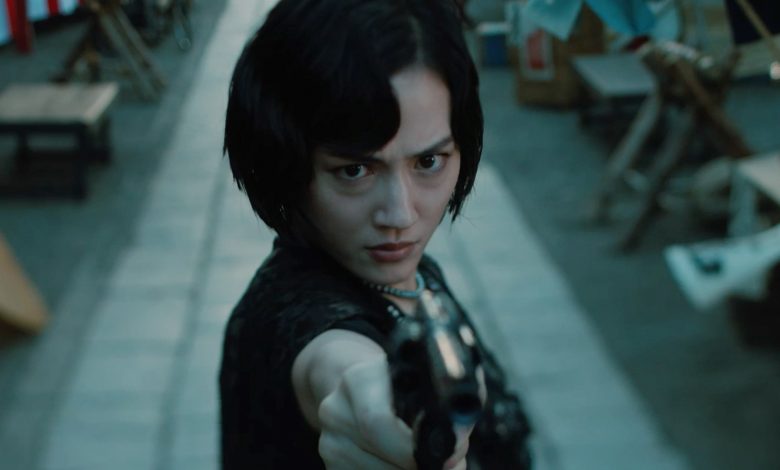
The story is set at the height of the Taisho Democracy, a brief period of liberalism and cultural blossoming in Japan sandwiched between the samurai era and the rise of militarism. We are introduced to Yuri (Ayase Haruka), a woman of immense elegance and mystery. To the patrons of the district, she is the “Madam” of an underground brothel (a sophisticated club in the vein of a speakeasy). She projects an air of calm authority, wearing immaculate Western dresses and managing the chaos of Tokyo’s underworld.
But Yuri has a past. Years ago, she was known as the finest spy and assassin in East Asia, a ghost who eliminated 57 targets with a customized Smith & Wesson revolver before vanishing. She has traded bullets for business ledgers, hoping to live out her days in the shadows.
The Trigger
Her peace is shattered when she crosses paths with a young boy named Shinta (played by Hamura Jinsei/Gooki Maeda). Shinta is not just a runaway; he is the sole survivor of a massacre that claimed his family. His father, a man with dangerous connections, entrusted him with key documents—a financial secret that could expose the corruption of the Imperial Japanese Army and alter the course of the nation’s future.
Suddenly, Yuri finds herself as the boy’s reluctant guardian. The Imperial Army, led by a ruthless and sadistic officer (played with terrifying zeal by Shimizu Hiroya), descends upon Tokyo to hunt them down. Yuri must dust off her revolver, shed her retirement, and engage in a desperate game of cat and mouse through the fog-drenched streets. What follows is a blood-soaked escort mission where Yuri battles not just an army, but the ghosts of a war she thought she had left behind.
Director’s Vision: Yukisada Isao’s “Action Noir”
Yukisada Isao is a fascinating choice for this material. Known for films like Crying Out Love in the Center of the World, he brings a melodramatic sensibility to the action genre. This is not a film of shaky-cam chaos; it is a film of deliberate, painterly composition.
The Taisho Aesthetic: The film is a visual feast. The production design captures the unique “East meets West” vibe of 1920s Japan. We see characters in kimonos walking alongside men in three-piece suits and women in flapper dresses. The color palette is rich with deep reds, shadowy blues, and the golden glow of streetlamps. Yukisada uses the fog of Tokyo (often CGI-enhanced but atmospherically effective) to create a dreamlike, almost supernatural battleground.
Action Choreography: The action sequences are stylized rather than realistic. Yuri fights in full gowns, her movements fluid and dance-like. The gunplay is reminiscent of the “Heroic Bloodshed” genre of Hong Kong cinema, but slowed down to emphasize precision. Every shot Yuri takes feels calculated. The director focuses heavily on the mechanics of the revolver—the reloading, the weight of the trigger, the smoke—making the weapon a character in itself.
The Cast: Ayase Haruka’s Transformation
The film rests entirely on the shoulders of its lead, and she delivers a performance for the ages.
- Ayase Haruka as Yuri: This is a physical and emotional tour de force. Ayase reportedly underwent months of training to master the handling of the revolver and the close-quarters combat (CQC). She plays Yuri with a stoic, “Dark Hero” energy. She rarely raises her voice; her threat is conveyed through her eyes. Yet, beneath the killer’s instinct, she shows a maternal warmth toward the boy, channeling the energy of Gloria or Leon: The Professional.
- Hasegawa Hiroki: Playing a lawyer/advocate who becomes entangled in Yuri’s mission, Hasegawa provides the moral compass and a touch of romance to the gritty proceedings. His chemistry with Ayase is understated but palpable.
- Shimizu Hiroya and Jesse: The villains are crucial in a film like this. Shimizu plays the military antagonist with a manic, unhinged energy that contrasts perfectly with Yuri’s ice-cold demeanor. Jesse, a member of the idol group SixTONES, surprises with a physically demanding role that proves his acting chops extend beyond the stage.
- Shishido Kavaka: As one of Yuri’s allies, she brings a tough, street-smart edge to the ensemble, proving that the women in this film are far more dangerous than the men.
Critical Review: Style Over Substance, or a Perfect Balance?
Revolver Lily is a film that demands patience. At 2 hours and 19 minutes, it is significantly longer than the average action flick. Does it justify the runtime?
The Good: A Triumph of Style
If you love costume design and cinematography, this film is a 10/10. The contrast of a woman in a white silk dress covered in blood and mud is a striking image that defines the movie. The shootout in the fog is one of the most visually inventive action scenes of 2026. The film also deserves praise for its feminist undertones. In a deeply patriarchal society like 1924 Japan, Yuri is the most capable person in the room, dictating terms to generals and gangsters alike.
The Bad: Pacing Issues
The film’s middle act does sag under the weight of political exposition. The details of the “financial secret” and the military infighting can get convoluted for international audiences not familiar with Taisho-era politics. There are moments where the film pauses the action for long philosophical conversations that, while well-acted, slow down the momentum built by the opening sequence.
The Action
While not as frequent as a John Wick movie, the action beats are impactful. The sound design of the gunshots is deafening and visceral. The film does not shy away from the brutality of the era, but it avoids being gratuitous. It treats violence as a tragedy rather than just entertainment.
Revolver Lily is a stunning, hard-boiled action drama that proves Japanese cinema can compete with Hollywood’s blockbusters in terms of scale and production value.
Ayase Haruka creates an instant icon in Yuri—a character who deserves a sequel. While the plot can be dense, the sheer beauty of the visuals and the coolness of the lead performance make it a mandatory watch. It is a stylish, bloody, and surprisingly emotional ode to a forgotten era. If you like your action movies dressed in silk and smelling of gunpowder, Revolver Lily is your target.