The ‘Burbs: A Modern Nightmare Behind the Picket Fences
- Category: Dark Comedy, Mystery, Thriller
- Release Date: February 8, 2026 (Peacock Premiere)
- Cast: Keke Palmer, Jack Whitehall, Mark Proksch, Paula Pell, Julia Duffy, Justin Kirk
- Language: English
- Duration: 8 Episodes (Approx. 30-40 mins each)
- Creator: Celeste Hughey
- Executive Producers: Seth MacFarlane, Brian Grazer, Dana Goldberg
“I’ve never seen that. I’ve never seen anybody drive their garbage down to the street and bang the hell out of it with a stick. I’ve never seen that.” That famous line from the 1989 Joe Dante cult classic The ‘Burbs defined a generation’s suspicion of suburbia. Now, nearly four decades later, the cul-de-sac is open for business once again.
Premiering on February 8, 2026, on Peacock, the television adaptation of The ‘Burbs is a bold experiment in nostalgia and modern satire. Produced by Seth MacFarlane (Family Guy, Ted) and created by Celeste Hughey (Dead to Me, Palm Royale), this limited series attempts to translate the paranoid energy of Tom Hanks’ original film into the era of Ring doorbells, Nextdoor app wars, and HOA tyranny. Starring the charismatic powerhouse Keke Palmer and the perpetually anxious British comedian Jack Whitehall, the series asks the eternal question: Are your neighbors just weird, or are they actually burying bodies in the backyard? For the viewers on fmovies.tr who love a mystery wrapped in a laugh track, this is the first must-watch comedy-thriller of the year.
The Plot: Moving Home Was the First Mistake
While the 1989 film took place over a single week of vacation, the series expands the scope. The story follows a young married couple, Samira (Keke Palmer) and Rob (Jack Whitehall), who are looking for a fresh start. Rob, seeking to reconnect with his roots (or perhaps escape his failures), convinces Samira to move back into his childhood home in the suburbs.
Samira is skeptical. She is a modern woman used to the anonymity of the city, and the suffocating intimacy of a cul-de-sac where everyone knows your recycling schedule is her personal hell. Rob, on the other hand, views the neighborhood through rose-tinted glasses of nostalgia. However, those glasses are quickly shattered.
The New Neighbors
The inciting incident mirrors the original: new neighbors move in next door. But these aren’t just eccentric hermits; they are genuinely unsettling. Strange noises at night, digging in the garden at 3 AM, and a refusal to participate in the mandatory neighborhood potlucks trigger Samira’s intuition.
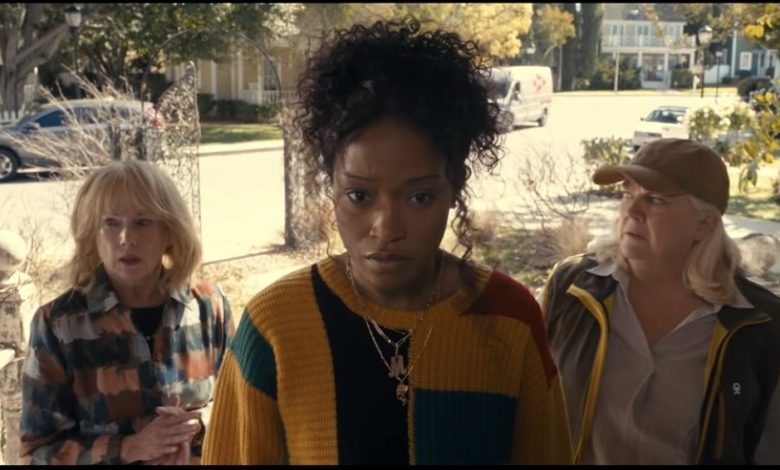
As Rob tries to play the diplomat, desperate to fit in with the community elders like the intense Dana (Paula Pell) and the suspicious Lynn (Julia Duffy), Samira begins her own investigation. What starts as mild curiosity spirals into genuine paranoia. Is the neighborhood watch protecting them, or watching them? The series brilliantly updates the “paranoia” angle by incorporating modern technology. The threat isn’t just a spooky house; it’s digital surveillance, gossip threads, and the realization that in 2026, privacy is the ultimate illusion.
Creator’s Vision: Celeste Hughey Updates the Satire
Rebooting a beloved classic is a dangerous game. The 1989 film is sacred ground for many horror-comedy fans. However, showrunner Celeste Hughey brings a specific pedigree that makes her perfect for this project. Her work on Dead to Me proved she can balance grief, murder, and laugh-out-loud comedy seamlessly.
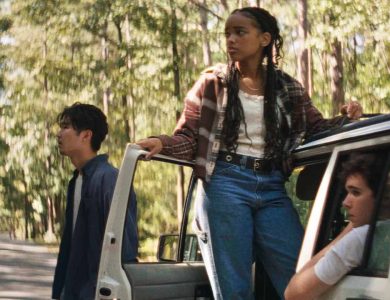
Tone and Atmosphere: The series leans heavily into “Sun-Drenched Noir.” The lawns are perfectly green, the sky is too blue, and the smiles are too wide. This creates an uncanny valley effect that is more unsettling than a dark haunted house. Hughey uses the aesthetic of the “perfect suburb” to hide the rot underneath.
Modernizing the Themes: The original film was about the fear of the “Other”—the foreign, the weird, the non-conformist. The 2026 series flips the script. It explores themes of gentrification, the performative nature of being a “good neighbor,” and the racial dynamics of a Black woman (Samira) moving into a predominantly white, old-school neighborhood. It adds a layer of social commentary that gives the comedy teeth without being preachy.
The Cast: A Comedic Power Couple
The casting of The ‘Burbs is inspired, mixing mainstream stars with alternative comedy legends.
- Keke Palmer as Samira: Palmer (Nope, Hustlers) is the undisputed star. She brings an energy that commands the screen. Samira is the audience surrogate—the only sane person in an insane world. Palmer’s ability to switch from comedic exasperation to genuine terror is what grounds the show. She is not just the “wife” character; she is the detective, the skeptic, and the action hero.
- Jack Whitehall as Rob: Whitehall is an interesting choice to fill the shoes of the Tom Hanks archetype. He doesn’t try to be Hanks. Instead, he leans into his own brand of “posh anxiety.” Rob is desperate to be liked, making him vulnerable to manipulation. The dynamic between Palmer’s confidence and Whitehall’s neuroticism creates a classic comedic friction.
- Mark Proksch as Tod: Fans of What We Do in the Shadows know Proksch as the energy vampire Colin Robinson. Here, he plays a neighbor who is delightfully dull yet incredibly suspicious. His deadpan delivery is a highlight.
- Paula Pell and Julia Duffy: Comedy veterans Pell (SNL, Girls5eva) and Duffy (Newhart) play the neighborhood matriarchs. They represent the “old guard” of the suburbs, the people who measure your grass with a ruler. They are hilarious villains who might be more dangerous than the supposed murderers next door.
- Justin Kirk as Gary: Kirk (Weeds) brings a chaotic, sleazy energy to the neighborhood, perhaps mirroring the Bruce Dern “soldier” character from the original, but updated for the modern age.
Critical Review: Does It Live Up to the Cult Classic?
The ‘Burbs (2026) manages to step out of the shadow of its predecessor by changing the medium. A TV series allows for a slower burn than a 100-minute movie, and this works to the show’s advantage.
The Mystery Box
The show is structured as a mystery-box thriller. Each episode ends on a cliffhanger that reveals a new secret about the cul-de-sac. It’s bingeworthy television. Unlike the movie, which kept the truth ambiguous until the end, the series drops breadcrumbs constantly. We learn that everyone on the street has something to hide, not just the new guys. This expands the narrative universe and makes the cul-de-sac feel like a character itself.
The MacFarlane Influence
With Seth MacFarlane producing, there is a specific rhythm to the dialogue. It is snappy, pop-culture-heavy, and occasionally absurd. However, it is more grounded than Family Guy or Ted. The humor comes from character interactions rather than random gags. It feels closer to Only Murders in the Building in its sensibility.
Strengths and Weaknesses
The strength lies in Keke Palmer. She is simply magnetic. The weakness might be the pacing in the middle episodes. Stretching a simple premise into 8 episodes risks repetition—how many times can they break into the neighbor’s house? However, the introduction of subplots involving the HOA and local real estate politics keeps the world feeling fresh.
The show also wisely avoids simply remaking iconic scenes. You won’t see a shot-for-shot remake of the sardine-eating scene. Instead, it pays homage through Easter eggs (look out for the red rover dog references) while building its own identity.
The ‘Burbs is a sharp, funny, and surprisingly tense update on a classic. It proves that the suburbs are still the scariest place on earth.
Keke Palmer and Jack Whitehall have excellent chemistry, and the supporting cast of oddballs makes every scene a delight. It is a satire of modern living that will make you look at your own neighbors with fresh suspicion. If you loved The Watcher but wished it had more jokes, or if you loved the original movie and are open to a new interpretation, this is the show for you.