Yek tasadof-e sadeh (It Was Just an Accident): A Searing Inquiry into Justice and Memory
- Category: Thriller, Drama, Mystery
- Release Date: May 20, 2025 (Cannes Premiere)
- Cast: Vahid Mobasseri, Mariam Afshari, Ebrahim Azizi, Hadis Pakbaten
- Language: Persian (English/Turkish Subtitles Available)
- Duration: 1h 43m
- Director: Jafar Panahi
In the annals of contemporary cinema, few figures command the moral authority and artistic resilience of Jafar Panahi. Despite being officially banned from filmmaking and having faced imprisonment by the Iranian regime, Panahi continues to craft masterpieces in the shadows. His latest offering, Yek tasadof-e sadeh (internationally titled It Was Just an Accident), is perhaps his most visceral and genre-bending work to date. Winner of the prestigious Palme d’Or at the 2025 Cannes Film Festival, this film sheds the docu-fiction playfulness of Taxi and the meta-commentary of No Bears for something tighter, darker, and infinitely more suffocating: a revenge thriller that slowly morphs into a profound philosophical treatise on the nature of justice.
For viewers on fmovies.tr, this is not just an art-house curiosity; it is a nail-biting suspense film that rivals the tension of Hitchcock or Farhadi. Starring the devastatingly expressive Vahid Mobasseri, the film asks a question that haunts every society emerging from trauma: When the law is the criminal, what does justice look like? Can we trust our own memories when they were formed behind a blindfold?
The Plot: The Sound of Terror
The film opens with the titular “accident.” On a dark, desolate highway outside Tehran, a man named Eghbal (Ebrahim Azizi) accidentally runs over a stray dog while driving with his family. The incident seems mundane, if tragic. Eghbal takes his damaged car to a nearby garage, a dusty, grease-stained workshop run by Vahid (Vahid Mobasseri), an unassuming, middle-aged mechanic.
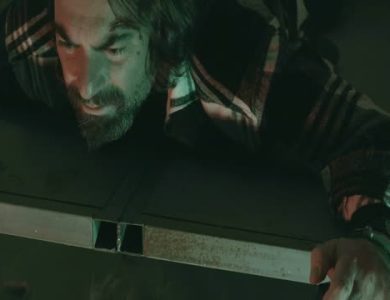
What happens next is a masterclass in sound design. Vahid is working under a chassis when he hears a specific rhythm: a squeak-thump, squeak-thump. It is the sound of a prosthetic leg. Vahid freezes. He knows this sound. It is the sound that haunted his nightmares for years during his time as a political prisoner in Evin Prison. He is convinced that this mundane customer is “Peg Leg” Eghbal, the sadistic interrogator who tortured him and countless others while they were blindfolded.
The Road Trip from Hell
Driven by a sudden, paralyzing panic that quickly turns into rage, Vahid makes a split-second decision. He incapacitates Eghbal and throws him into the back of his van. But doubt gnaws at him. He never saw his torturer’s face—only heard his voice and that distinctive limp. To execute justice, he needs confirmation.
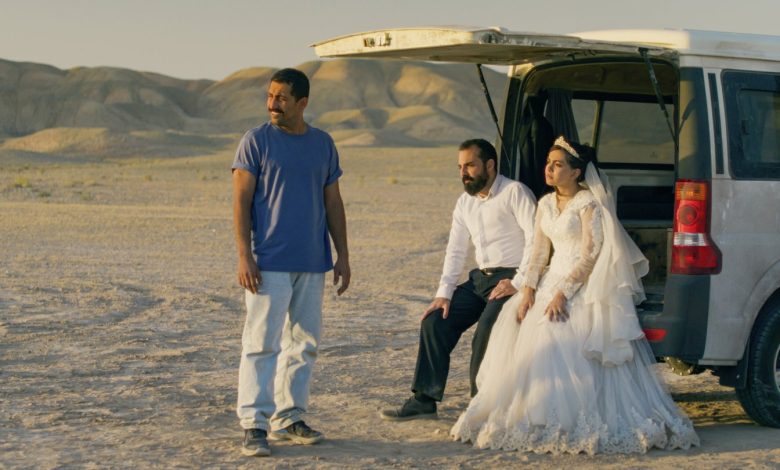
Thus begins a harrowing road trip through the underbelly of Iranian society. Vahid rounds up a motley crew of fellow survivors to verify the captive’s identity. There is Shiva (Mariam Afshari), a war-scarred photographer who tries to be the voice of reason; Hamid, a volatile former inmate ready to kill on sight; and Golrokh (Hadis Pakbaten), a young bride-to-be who joins the quest in her wedding dress, adding a surreal, tragic visual to the grim proceedings. As they drive through the night, arguing over the man’s fate, the film transforms into a claustrophobic jury deliberation on wheels.
Director’s Vision: Panahi’s Darkest Hour
Jafar Panahi has always been a humanist, finding humor and warmth even in dire circumstances. It Was Just an Accident marks a tonal shift. The humor here is pitch-black, bordering on the absurd. The sight of a man locked in a toolbox while his captors argue about ethical philosophy is grimly funny, but the laughter catches in your throat.
Visually, Panahi and his cinematographer Amin Jafari work miracles with limited resources. The film is largely confined to the van and the garage, creating a pressure-cooker atmosphere. The use of low light and shadows emphasizes the theme of “blindness”—just as the prisoners were blindfolded, the audience is often kept in the dark about Eghbal’s true nature. Is he a monster, or just an innocent man with a bad leg? Panahi refuses to give easy answers, forcing us to confront our own bloodlust. The film is a direct challenge to the “eye for an eye” mentality, suggesting that revenge, while satisfying, is a messy, imprecise business that often claims the soul of the avenger.
The Cast: Faces of Trauma
The acting is naturalistic and raw, devoid of theatricality.
- Vahid Mobasseri as Vahid: Mobasseri delivers a tour-de-force performance. He is not an action hero; he is a trembling, sweating mess of a man. His Vahid is driven not by heroism, but by PTSD. You can see the terror in his eyes every time he looks at his captive. It is a portrayal of trauma that feels uncomfortably real.
- Ebrahim Azizi as Eghbal: Azizi has the difficult task of playing the ambiguity. He spends much of the film pleading for his life, claiming to be a simple family man. Yet, there are flashes of arrogance, subtle shifts in tone that make you wonder. Is he acting? Or is he truly innocent? Azizi navigates this duality perfectly.
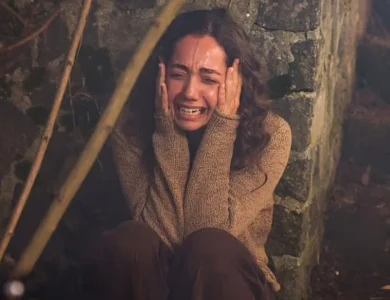
- Mariam Afshari as Shiva: Afshari provides the moral compass. Her character represents the struggle to maintain humanity in an inhumane system. Her interactions with Vahid provide the film’s emotional core.
- Hadis Pakbaten as Golrokh: The image of her in a dirty wedding dress, holding a tire iron, is iconic. She represents the stolen future of Iran’s youth, interrupted by the legacy of past violence.
Critical Review: A Masterpiece of Moral Ambiguity
Yek tasadof-e sadeh is a film that vibrates with tension. It is a thriller that functions like a ticking bomb, but the explosion is emotional rather than physical.
The Power of Sound
Sound is a character in this movie. The squeak of the prosthetic leg becomes a motif of terror, reminiscent of the ticking clock in Dunkirk or the heavy breathing in Blue Velvet. Panahi uses sound to trigger memory, showing how trauma resides in the senses. The climax, which relies almost entirely on an auditory test, is one of the most nerve-wracking sequences in cinema history.
Political Subtext
While the plot is a thriller, the subtext is undeniably political. The film serves as an allegory for a nation grappling with its history of oppression. The characters are not just individuals; they are a cross-section of a society scarred by arbitrary imprisonment. By making the “judge and jury” a group of ordinary victims, Panahi explores the dangers of vigilante justice in a state where the rule of law has collapsed.
It Was Just an Accident is essential viewing. It is brave, intelligent, and deeply disturbing. It confirms Jafar Panahi’s status not just as a great Iranian director, but as one of the world’s most vital filmmakers. It demands that the audience look into the abyss of revenge and ask themselves: If you had the chance to destroy the monster who ruined your life, would you do it? And if you did, would you ever be able to sleep again?