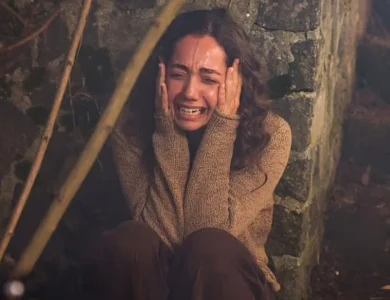
Hateshinaki Scarlet: Mamoru Hosoda’s Masterpiece Transcending Time
- Category: Animation, Drama, Fantasy, Action
- Release Date: February 20, 2026
- Cast: Mana Ashida, Masaki Okada, Masachika Ichimura, Koji Yakusho
- Language: Japanese (English Sub/Dub)
- Duration: 1h 52m
- Director: Mamoru Hosoda
Cinema has long been the medium of dreams, but few directors capture the fluidity of dreams quite like Mamoru Hosoda. Following the global success of Belle and Mirai, Hosoda returns with his most ambitious project to date: Hateshinaki Scarlet (Endless Scarlet). Scheduled for release on February 20, 2026, this film is not merely an animation; it is a Shakespearean tragedy reimagined through the lens of high-concept fantasy. By blending the classic motifs of Hamlet with a metaphysical journey through the “Land of the Dead,” Hosoda challenges the boundaries of what anime can achieve narratively and visually.
The Plot: A Shakespearean Revenge in the Afterlife
At its core, Hateshinaki Scarlet is a tale of vengeance that transcends the physical realm. The story introduces us to Scarlet (voiced by the talented Mana Ashida), a brave princess of a medieval kingdom. Her life is shattered when her father, the benevolent King Amlet (voiced by Masachika Ichimura), is brutally murdered in a coup orchestrated by his own brother, the ruthless Claudius.
Scarlet’s attempt to avenge her father ends in catastrophe, and she awakens not in her castle, but in the “Land of the Dead.” This is where Hosoda’s genius shines. This afterlife is a chaotic, shifting reality where souls who die with unfulfilled burdens are trapped. To escape “Emptiness”—a state of total cessation—Scarlet must traverse this mad world to reach “The Endless Place.”
Crossing Time and Space
The narrative complexity deepens with the introduction of Hijiri (voiced by Masaki Okada). Unlike Scarlet, Hijiri is not a medieval warrior; he is a paramedic from modern-day Japan who has inexplicably wandered into this netherworld. The dynamic between Scarlet, a princess consumed by archaic codes of honor and revenge, and Hijiri, a modern healer dedicated to saving lives, forms the emotional backbone of the film. Their journey is a “buddy road movie” through hell, exploring whether the cycle of hatred can ever truly be broken.
Director’s Vision: Mamoru Hosoda’s New Horizon
Mamoru Hosoda is known for his fascination with dual worlds—the internet vs. reality in Summer Wars and Belle, or the beast realm vs. Shibuya in The Boy and the Beast. In Hateshinaki Scarlet, he evolves this trope. The “Land of the Dead” is not a digital utopia but a textured, perilous purgatory.
Hosoda has stated in interviews that he wanted to move away from “Hollywood-style CG” and traditional 2D animation to create a “new look.” The film utilizes a groundbreaking hybrid animation style that gives the afterlife a painterly, yet unsettlingly realistic aesthetic. The environment feels alive, breathing with the same desperation as its inhabitants. This visual departure marks a significant evolution for Studio Chizu, proving they are not content to rest on the laurels of their past successes.
The Cast: A Symphony of Voices
The emotional weight of the film rests heavily on its voice cast, and the performances are nothing short of stellar.
- Mana Ashida as Scarlet: Ashida delivers a tour-de-force performance. She captures Scarlet’s transition from a rage-filled avenger to a young woman grappling with the cost of her anger. Her voice carries a nobility that never falters, even when her character is at her lowest point.
- Masaki Okada as Hijiri: Okada provides the necessary grounding. As the audience surrogate from the modern world, his confusion and eventual resolve provide a perfect counterpoint to Scarlet’s intensity.
- Masachika Ichimura as King Amlet: Even in his brief scenes, Ichimura brings a gravitas that explains why Scarlet is so desperate to avenge him.
- Koji Yakusho as Claudius: Playing the villain, Yakusho (a frequent Hosoda collaborator) is terrifying. He isn’t a cartoonish villain but a calculating, cold presence that haunts the narrative.
Critical Review: Is It Worth Watching?
Hateshinaki Scarlet is arguably Mamoru Hosoda’s darkest film, yet it is paradoxically his most hopeful. While the premise is rooted in the tragedy of Hamlet, the film deconstructs the futility of revenge in a way that feels incredibly relevant to the modern world.
Visuals and Pacing
The film runs for 1 hour and 52 minutes, and not a single frame is wasted. The pacing is relentless, driven by Scarlet’s urgency. The action sequences—sword fights that defy the laws of physics within the afterlife—are choreographed with a balletic grace. However, the film takes time to breathe during the quiet moments between Scarlet and Hijiri, allowing the audience to process the heavy themes of grief and redemption.
The Verdict
For fans of Studio Chizu, this is a must-watch. It retains the heart and family themes of Wolf Children but wraps them in the epic scale of Belle. It challenges the viewer to think about what we leave behind and how we deal with the injustices of the past. Hateshinaki Scarlet is a triumph of storytelling, cementing Hosoda’s legacy as one of the true auteurs of anime.